
Housing and Feeding of Baby Parrots
Housing and Feeding of Baby Parrots
Hand-fed parrots usually become more social, confident, and easier to tame. This method can also improve breeding success because parent birds may produce another clutch sooner. When breeding pairs neglect or injure weak chicks, proper hand-feeding care can help save their lives.
Many exotic birds, including parrots and softbill species, are altricial, meaning they hatch blind, vulnerable, and unable to control their body temperature. They rely completely on warmth, nutrition, and careful handling during early development.
Unlike poultry, parrots need specialized feeding techniques and dedicated care from experienced breeders. Modern hand-feeding methods allow aviculturists to raise healthy baby parrots from hatching until they are fully weaned. baby parrots for sale

Hygiene and Baby Movement
Nursery Management and Disease Prevention in Baby Parrots
The main goal of parrot nursery management is preventing disease. Baby parrots have developing immune systems and immature gut bacteria, making them highly vulnerable to infections, especially when exposed to stress from poor nutrition, improper feeding, or unsuitable environments.
A clean and organized nursery reduces the risk of disease outbreaks. Avoid mixing parent-raised chicks from different nests, even when the adult birds appear healthy, because some parrots can carry diseases without showing symptoms. Conditions such as Psittacine Beak and Feather Disease (PBFD) and polyomavirus can spread from parents to chicks through direct contact or contaminated environments.
Proper hygiene, controlled chick movement, and careful handling help prevent cross-contamination. Raising chicks from artificially incubated eggs can also reduce the risk of parent-to-chick infections when managed correctly.
If you plan to hand-feed parent-raised baby parrots, remove chicks from the nest box before three weeks of age or when pin feathers begin to develop. Older chicks may experience stress in a new nursery and refuse food initially, but they usually adapt and accept hand-feeding once they become comfortable. Fertile parrot eggs for sale

Always wash and sanitize your hands before and between feeding or handling different baby parrots. Use disposable gloves or a bird-safe disinfectant to reduce the risk of spreading infections. Keep chicks in their containers unless handling is necessary, and place each baby on a clean paper towel during weighing to maintain proper hygiene.
Preparing Hand-Feeding Formula for Baby Parrots
Always prepare a fresh batch of formula for each feeding. This keeps the food hygienic and removes the need for storage, which can increase the risk of contamination.
To prepare the formula correctly, use a precise scale to measure the powder and an accurate container to measure water. Clean utensils thoroughly before use and mix the formula well to achieve a smooth, consistent texture.
Using proper measuring tools and maintaining cleanliness ensures safe and effective feeding for baby parrots.
Cooking time will vary slightly with model of microwave oven and type of container. Plastic containers seem to cool the food slower than ones made of glass. The final temperature of the food, just before feeding, should be slightly warmer than human body temperature or about 40°C (100°F). Be careful not to overheat the food as burning the babies can occur if the food contains hot spots or is only a few degrees too hot. Talking parrots for sale
Water/Dry Mash Ratio of hand-feeding Formula
Formulas for young babies, up to day two to four, should be significantly more diluted, about 5 to 10 percent solids. These young babies may also develop better on less rich diets having lower fat and protein and more easily digested carbohydrates (another area requiring research). Older baby parrots for sale should receive formula with a solid content in the 20 to 30 per cent range which usually results in a consistency a little thinner than apple sauce. Do not assume that such a texture represents the correct nutrient density as thickeners can make a formula with low dry matter levels appear much denser. Formula can be maintained at the correct feeding temperature by setting it in a bowl of hot water.

Methods of Feeding
There are several possible techniques of feeding young parrots. Psittacine chicks produce a feeding response when the commissures of the beak are touched. This bobbing action closes the glottis and food passes into the crop. A bent teaspoon can be used to feed the formula but this can be a messy and time consuming way of feeding. Spoon feeding may produce a tamer bird because of the increased handling and is the preferred method of feeding of some of the most experienced aviculturists in the world (Low, 1987). However, there may be a greater chance of disease transmission with spoon feeding as the spoon is repeatedly touching the baby’s mouth and then dipped into the formula thus contaminating the food for the other babies.
Small plastic pipettes are used by some breeders to feed younger babies. Since these pipettes can only hold a few ml of food they require many repeated dippings into the food container with the same potential for disease spread as with spoons.

Catheter tipped syringes of various sizes are becoming popular instruments in feeding baby birds. Syringes can be used to slowly dribble the food into the mouth of the bird. Syringes allow the measuring of the amount of food fed and are easier to use. Silicone rubber and “O” ring syringes last longer than black rubber ones. Better still are syringes with no rubber gaskets and simply a concave round end. Soaking in tamed iodine disinfectant between feedings.

Hand-feeding baby parrots with a syringe requires patience, practice, and proper technique. Gently support the baby bird’s head, place the syringe tip on the left side of the beak, and deliver the formula toward the back of the mouth when the chick shows a feeding response. Using separate syringes for each clutch helps prevent the spread of infections between baby birds. how to Feed a parrot

Advanced Feeding Techniques for Baby Parrots
You can attach a short, soft rubber tube to the tip of a feeding syringe. This allows you to place food further back in the chick’s mouth and helps prevent food from entering the trachea. However, this method is less natural and may affect the chick’s behavior. In some cases, it can also delay the weaning process.
When feeding, fill the crop properly but avoid overstretching it. Always allow the crop to empty completely before the next feeding. Do not confuse loose skin around the crop with leftover food. Baby parrots for sale naturally have extra skin in this area to allow expansion during feeding.
Sick chicks require extra care. They are more likely to aspirate food, and their crop may become weak or flaccid. Place these chicks in small, supportive containers such as disposable cups. This helps keep them upright and prevents pressure on the crop.
Feeding frequency depends on the formula’s consistency, digestibility, and calorie content. parrot Chicks for sale younger than three days need feeding about six times daily. Older chicks typically require four feedings per day.
Use metal feeding tubes only when necessary, such as when force-feeding sick birds. what can i feed my parrot with
Cleaning and Disinfecting Feeding Equipment
Always disinfect feeding tools between uses. Replace equipment regularly to maintain hygiene and prevent disease.
Many breeders sterilize syringes by boiling them in water or using pressure cookers. However, most prefer cold disinfectant solutions for convenience.
Effective disinfectants include:
- Glutaraldehyde-based solutions (very strong)
- Quaternary ammonium compounds
- Iodophors (safe for regular use)
Avoid phenol-based disinfectants, as they can irritate the skin. Also, avoid chlorhexidine in wet environments because it does not effectively kill pseudomonas bacteria.
Poor disinfection practices can lead to serious infections. In some cases, contaminated syringes have caused bacterial outbreaks in young parrots. Always inspect equipment carefully and ensure proper sanitation.
Housing Baby Parrots: Brooders and Containers
Proper housing is essential when raising baby parrots. A well-designed brooder provides stable temperature, humidity, and comfort.
Breeders use different types of brooders, including:
- Homemade wooden boxes with heating elements
- Modified chick brooders
- Glass aquariums with custom heaters
While these options can work, they often lack precise temperature and humidity control. Heating pads, for example, may overheat chicks or fail to maintain consistent warmth.
Commercial brooders and infant incubators offer better control and safety. However, they can be expensive and difficult to source, especially when housing multiple chicks.
Maintaining consistent warmth and proper humidity is critical for healthy chick development. Always monitor your setup closely to avoid temperature fluctuations and dehydration.
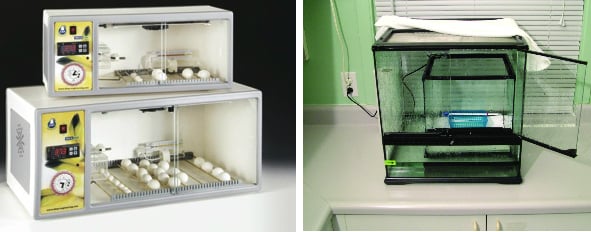
Choosing the Right Brooder for Baby Parrots
Use small brooders to house baby parrots. Smaller setups help prevent disease by keeping different clutches separate. Large brooders increase the risk of cross-contamination.
A good brooder should:
- Provide constant, even heat
- Allow precise temperature control
- Offer proper ventilation
- Be easy to clean
- Include a water source for humidity
One effective setup uses a small aquarium placed inside a larger container filled with warm water. Maintain the water at 40°C (100°F) using a submersible thermostat heater. Add a small amount of salt to reduce bacterial growth, including pseudomonas.
Always monitor water levels and refill evaporated water to keep the heater fully submerged.
Bedding for Baby Parrots
Proper bedding plays an important role in parrot chick care. Young chicks under two weeks old do best on soft, clean surfaces.
Recommended Bedding Options:
- Paper towels (for very young chicks)
- Plastic cups or small containers
- Wood shavings (for older chicks)
- Processed paper bedding
Change bedding at every feeding to keep it clean and dry.
As chicks grow (around 2–3 weeks), move them to larger containers lined with newspaper and topped with wood shavings. Avoid using corn cob, walnut shells, or pellet bedding, as many breeders no longer recommend them.
Some chicks may try to eat bedding material. This can happen due to poor diet or overheating. Towels allow easy monitoring of droppings but require frequent cleaning and can become messy.
For best results, use bedding that keeps chicks clean, dry, and well-supported. Housing and Feeding Baby Parrots
Temperature and Environment Control for Baby Parrots
Maintaining the correct temperature is essential when raising baby parrots. Young chicks cannot regulate their body heat, so they depend on a warm and stable environment for survival and healthy development.
Recommended temperature ranges:
- Room temperature: 78–82°F (25–28°C)
- Newly hatched chicks: 96–98°F (35–36.5°C)
- After 2–3 days: 92–96°F (33.5–35°C)
- Up to 2 weeks old: 90–92°F (32–33.5°C)
Watch for signs of temperature problems:
Too warm:
- Panting
- Restlessness
- Red or dry skin
Too cold:
- Shivering
- Weakness
- Poor digestion
- Refusing food
Chilled baby parrots can quickly become weak and may not recover without immediate care. Keep temperatures stable, monitor chicks regularly, and avoid sudden environmental changes
Final Tip for Healthy Chick Development
Consistent heat, proper bedding, and a clean brooder setup are essential for successful baby parrot care. Paying attention to these details helps reduce stress, prevent disease, and support strong, healthy growth.
| Age | Temperature °C | Temperature °F |
| Hatch to Day 2-3 | 35.0-36.5 | 96-98 |
| Day 3 to Day 14-21 | 31.1-34.0 | 88-94 |
| 3 weeks to Weaning | 25.0-30.0 | 76-86 |
Table 2-
