
How Do Birds Sleep?
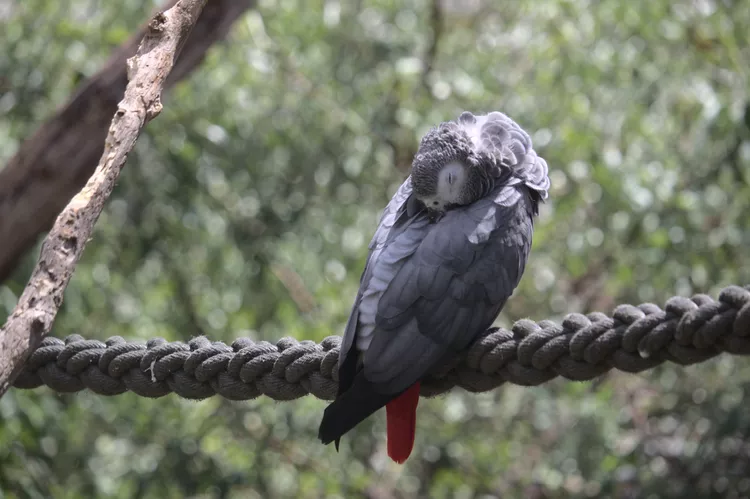
- Birds exhibit unique sleep behaviors, including unihemispheric sleep and unilateral eye closure, to stay alert and safe.
- Pet birds need 10-12 hours of sleep daily, and abnormal sleep patterns may indicate stress, illness, or environmental issues.
- Birds adapt their sleep habits based on their species and environment, such as roosting, sleeping on one leg, or even flying.
How Do Birds Sleep? Understanding Bird Sleep Behaviors and Habits
Most animals, including humans, naturally lie down on their backs, sides, or even stomachs when they sleep. Birds, however, are very different. Their feathers, wings, beaks, feet, and natural environments all influence how they rest. Understanding normal bird sleep behavior can help bird owners recognize potential health problems and provide the right environment for their pets to get enough rest.
Whether you already own a parrot or are researching parrots for sale, learning how birds sleep is an important part of responsible bird care. This is especially useful for people considering parrot birds for sale, including African Grey parrots, Amazon parrots, cockatoos, macaws, cockatiels, and other companion birds. pet-bird-behavior-problems/
Types of Bird Sleep
Birds share some similarities with mammals when it comes to sleep, but they also have several unique sleep patterns and adaptations.
Unihemispheric Sleep
Unihemispheric sleep means that one side of the brain can remain active while the other side rests. This adaptation allows birds to remain alert to potential predators even while sleeping.
In some birds, one eye may remain open while the opposite side of the brain rests. This behavior is known as unilateral eye closure. It allows birds to monitor their surroundings while still getting the rest they need.
This ability is particularly important for wild birds that must remain alert to predators. Pet birds may not face the same dangers, but they can still retain these natural sleeping behaviors.
Roosting
Roosting is the behavior of settling down in a safe location to rest or sleep. Birds may gather together on branches or other secure surfaces for warmth and protection.
Pet parrots commonly roost on a favorite perch inside their cage or aviary. Unlike mammals, they usually do not need a bed to sleep. Their feet are specially adapted to grip a perch while they rest.
Birds typically use nests for incubating eggs or caring for chicks rather than simply sleeping. Some pet birds may choose a nesting box as a sleeping location, but providing one can sometimes encourage unwanted breeding behavior.
Power Napping
Some bird species sleep in short periods rather than taking one long sleep. These brief periods of rest are sometimes referred to as power naps and can be especially important during migration.
Certain migratory birds have remarkable adaptations that allow them to rest while traveling long distances. These behaviors demonstrate just how differently birds can sleep compared with humans and other mammals.
How Many Hours Do Birds Sleep?
Sleep requirements vary depending on the species, age, environment, and individual bird. Many companion birds, particularly parrots, generally benefit from around 10–12 hours of uninterrupted sleep each night.
Pet parrots that do not get enough sleep may become irritable, stressed, noisy, or more prone to behavioral problems. A consistent sleep schedule is therefore an important part of caring for a healthy bird.
If you are looking at parrots for sale or planning to bring home a new bird, consider the sleeping requirements of the species before making a purchase. Different parrot species for sale can have different care requirements, so prospective owners should research their chosen bird carefully.
Unique Bird Sleep Adaptations
Birds have developed several fascinating adaptations that allow them to sleep safely.
Some birds can:
- Sleep using only one half of their brain at a time.
- Keep one eye open while sleeping.
- Sleep while standing on one leg.
- Grip a perch securely while resting.
- Fluff their feathers to stay warm.
- Tuck their heads into their feathers.
- Sleep while floating on water.
- Sleep during flight in certain migratory species.
The ability to sleep while perched is particularly useful for parrots. A healthy parrot can remain securely attached to its perch even while deeply asleep.
Where Do Birds Sleep?
Birds can sleep in many different locations depending on their species and environment. They may sleep:
- On a tree branch or perch
- On the ground
- Inside a nesting area
- On a nest while incubating eggs
- While floating on water
- While flying in some migratory species
- Hanging upside down in certain species
Wild birds usually choose secluded locations that provide protection from predators, rain, wind, and extreme temperatures.
Pet birds generally feel safest sleeping on a familiar perch inside their cage or aviary. If you are purchasing pet birds for sale, make sure you have an appropriately sized cage, comfortable perches, and a quiet sleeping environment prepared before bringing your bird home.
Creating a Good Sleeping Environment for Pet Parrots
A suitable sleeping environment can make a significant difference in your bird’s overall health and behavior.
Try to provide your parrot with a quiet, dark, and comfortable area during its normal sleeping hours. Avoid excessive noise, bright lights, television, or constant activity around the cage when your bird is trying to rest.
Some owners use a separate sleep cage or a cage cover to help create a consistent nighttime routine. However, every bird is different, so observe your pet and choose an arrangement that keeps it calm and comfortable.
This is particularly important when bringing home a newly purchased bird. Whether you are buying African Grey parrots for sale, Amazon parrots for sale, cockatoo parrots for sale, or macaws for sale, allowing the bird enough time to sleep can help reduce stress during the adjustment period.
Abnormal Sleep Behaviors in Pet Birds
Popular companion birds such as parrots, cockatiels, budgies, cockatoos, and macaws normally spend a significant portion of their day resting and sleeping. Changes in normal sleep behavior can sometimes indicate an underlying problem.
Potential warning signs include:
- Sleeping on the floor of the cage
- Sleeping inside the food dish
- Sleeping much more than usual
- Sleeping for significantly less than 10 hours
- Sitting unusually low on a perch
- Lying down on the side while resting
- Open-mouth breathing while trying to sleep
- Difficulty staying on the perch
- Sudden changes in the normal sleep schedule
These behaviors can be associated with illness, stress, temperature problems, pregnancy, injury, or other health concerns. If your bird suddenly develops abnormal sleeping habits, contact an avian veterinarian for professional advice. Reading the Language of Bird Body Parts
Sleep Is an Important Part of Parrot Care
Good sleep is just as important to birds as proper nutrition, exercise, social interaction, and veterinary care. A bird that consistently receives adequate, uninterrupted sleep is more likely to maintain normal behavior and overall wellbeing.
For anyone searching for parrots for sale, parrot birds for sale, pet parrots for sale, or hand-fed parrots for sale, understanding sleep requirements should be part of the buying decision. Owning a bird is a long-term responsibility, and prospective owners should make sure they can provide appropriate housing, nutrition, enrichment, social interaction, and adequate sleep.
Whether you are interested in African Grey parrots for sale, Amazon parrots for sale, macaws for sale, cockatoos for sale, Green cheek conure for sale, or other pet birds, learning normal sleep behavior will help you recognize when your bird is comfortable—and when something may be wrong. how-to-feed-a-parrot/
