
How to Train Your Bird to Allow Petting
Teaching your bird to enjoy petting is less about forcing a behavior and more about building trust and understanding your bird’s body language. Every bird has a unique personality. While some parrots enjoy head scratches and close contact, others prefer to keep their distance.
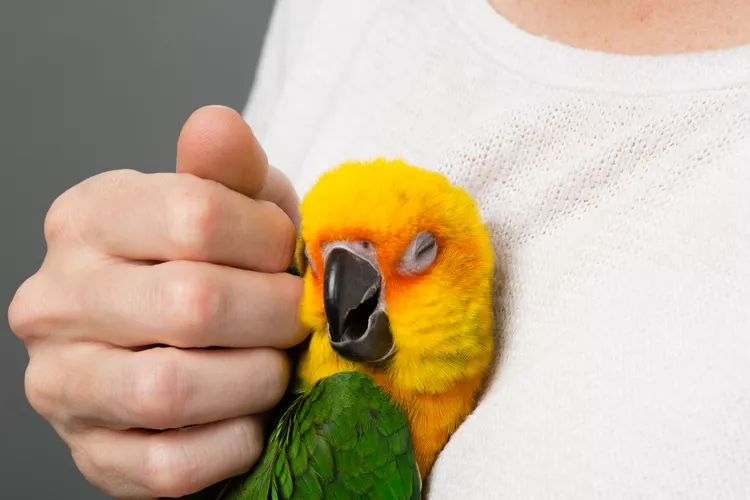
The key is to respect your bird’s comfort level and introduce physical contact gradually. With patience, positive interactions, and short training sessions, you can help your bird become more comfortable with gentle petting.
Key Tips for Getting Your Bird Comfortable With Petting
- Learn your bird’s body language and stop when it shows signs of stress or discomfort.
- Introduce touch gradually, starting with areas such as the beak and face.
- Pet in the natural direction of the feathers to avoid causing irritation.
- Keep training sessions short and positive rather than forcing physical contact.
- Build trust through other activities, including talking, games, tricks, toys, and supervised exploration.
Learn Your Bird’s Body Language
Before trying to pet your bird, learn to recognize its signals. Understanding bird body language can help you know when your parrot is relaxed, nervous, excited, or uncomfortable.
A bird that becomes stiff, stares intensely, moves away, pushes your hand away, or attempts to bite is telling you that it does not feel comfortable. Reaching toward the back of a bird’s head can sometimes be perceived as threatening, particularly when the bird is not accustomed to human hands.
Ignoring these warning signs can cause your bird to associate hands and fingers with stressful experiences. Over time, this may make your bird nervous whenever you reach toward it.
Signs Your Bird May Enjoy Petting
A relaxed bird may show several signs that it is comfortable with gentle contact. It may:
- Lower or bow its head toward your hand
- Turn its head slightly to one side
- Remain relaxed while your hand approaches
- Close its eyes during gentle head scratches
- Fluff its head feathers when it wants attention
Remember that body language varies from one bird to another. Spend time learning what is normal for your individual bird.
Choose the Right Time for Training
Timing can make a big difference when teaching your bird to accept handling.
Choose a quiet period when your bird is calm and relaxed. This could be after a meal or around its normal bedtime. Avoid training when your bird is excited, frightened, tired, or already showing signs of irritation.
Keep your hand where your bird can clearly see it. Talk to your bird calmly before attempting to touch it.
If your bird moves away or resists, don’t force the interaction. Give it some space and try again later.
Short, positive sessions are usually more helpful than long sessions that make your bird uncomfortable.
Start With Gentle Touch
When your bird is comfortable with your hand nearby, begin with very gentle contact.
You can start by lightly touching the beak. Move slowly and keep your fingers away from the eyes. Be prepared for your bird to move away or gently test your finger with its beak.
If your bird remains relaxed, gradually move your finger toward the skin around the face and cheeks.
Don’t rush this process. The goal isn’t to pet your bird as quickly as possible. The goal is to teach your bird that your hands are safe.
Move Slowly Toward the Head and Neck
Once your bird accepts gentle touching around its face, you can gradually work toward the head and neck.
Watch your bird’s reaction throughout the process. If it becomes tense, moves away, or displays defensive body language, stop and give it a break.
When petting feathers, follow their natural direction. Moving against the feathers can feel uncomfortable or irritating.
Many companion parrots enjoy gentle scratches around the head and neck, but every bird is different. Allow your bird to decide how much physical contact it wants.
Avoid Excessive Body Petting
Although some birds enjoy cuddling, excessive petting around the body can create problems, particularly in mature birds.
For many companion parrots, it is generally better to focus physical affection on the head and neck rather than repeatedly stroking the back and body.
Learning your bird’s individual preferences will help you provide affection without creating unnecessary stress or unwanted behavior.
What If Your Bird Doesn’t Like Being Petted?
Don’t assume that a bird that dislikes petting cannot form a strong bond with you.
Some birds simply prefer limited physical contact. Instead of forcing your bird to accept petting, focus on building trust in other ways.
Start with small steps. For example, simply holding your hand near your bird without touching it can help your bird become more comfortable around your hands.
Reward calm behavior with praise, attention, or an appropriate treat. Over time, your bird may become more comfortable with your presence.
Build Trust Beyond Petting
Petting should never be the only way you interact with your bird.
Parrots are intelligent and social animals that can benefit from a variety of positive interactions. Spend time with your bird by:
- Teaching simple tricks
- Playing interactive games
- Offering safe toys
- Talking to your bird
- Practicing step-up training
- Providing supervised exploration
- Offering appropriate treats
- Spending quiet time together
These activities can strengthen your relationship and help your bird associate you with positive experiences.
Use Treats to Build Confidence
Positive reinforcement can also help a nervous bird become more comfortable around your hands.
Offer a small, appropriate treat from your fingers while your bird remains in a safe and comfortable environment. If your bird is initially afraid, place the treat nearby rather than moving your hand closer.
As your bird becomes more confident, gradually encourage it to approach your hand voluntarily.
The goal is to let your bird participate in the process rather than forcing physical interaction. How to potty train a parrot
Be Patient With Your Bird
Every parrot learns at a different pace. A bird that has had limited human interaction may need considerably more time to become comfortable with handling.
Never chase, grab, or force a bird to accept petting. Doing so can damage the trust you’ve worked to build.
If your bird consistently avoids physical contact, respect its preference. You can still have a strong relationship through training, play, talking, enrichment, and everyday companionship.
Looking for a Friendly Pet Parrot?
If you’re considering adding a bird to your family, learning about parrot personality, handling, socialization, and care requirements is an important first step.
When searching for parrots for sale, look for healthy, well-socialized, and legally sourced companion birds from a reputable breeder or responsible seller. Depending on your experience and lifestyle, you may be researching African grey parrots, Amazon parrots, cockatiels, conures, cockatoos, macaws, or other pet parrots.
Before you buy a parrot, make sure you understand the bird’s diet, housing, lifespan, social needs, enrichment requirements, and veterinary care.
If you’re searching for pet parrots for sale, hand-raised parrots, tame parrots, or healthy captive-bred birds, visit Timiesbirds.com to explore available parrots and learn more about responsible parrot ownership.
A well-socialized parrot can become a wonderful companion, but the best relationships are built through patience, trust, positive reinforcement, and respect for the bird’s individual personality.
